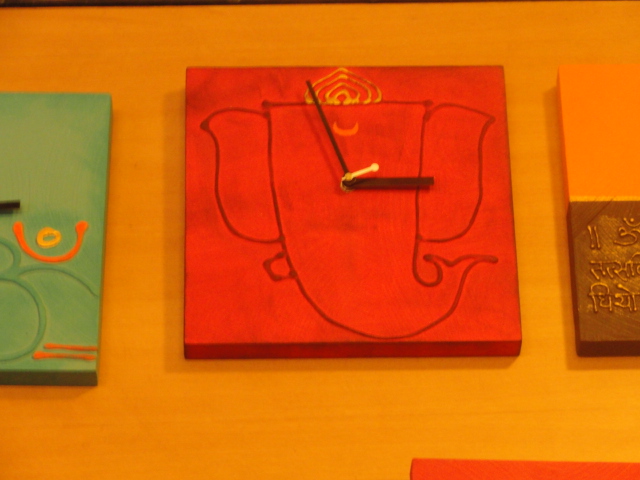
Market Cross Clock, Chichester
(click to enlarge)
Yeah, "Paris, London, Tokyo" sounds more traditional, but it makes me feel comfortably akin to Bugs Bunny because I have spoken in Albuquerque, Saskatoon and Cucamunga (well, Rancho Cucamonga, but God and Bugs Bunny know that's not as funny). In winter, Saskatoon will be different. Daylight Savings Time is a topic I don't like to discuss.
I hope you find some things here that you didn't know before, so that you feel your time was well spent. Time is money (or at least we talk about it as though it can be spent, saved, lost, wasted and stolen). Be generous with your time and use it joyfully!


Click images for large readable maps
Good if you call or chat online with distant friends:
If you have a tablet computer or maybe a smartphone, there is an app called "World Clock" that's fun, and it can be a regular clock and alarm clock too, but you can see what time it is anywhere, and with a slider (on an iPad, anyway) you can go ahead or back to check what time it will be in other places at a certain time at our house.
Thus 1800 and 1900 were not leap years in the Gregorian calendar by virtue of rule 2 and 2100 will also not be a leap year for the same reason. However 2000 is a leap year as defined in rule 3.
That wording is easier to understand than this:
That the several Years of our Lord, 1800, 1900, 2100, 2200, 2300, or any other hundredth Years of our Lord, which shall happen in Time to come, except only every fourth hundredth Year of our Lord, whereof the Year of our Lord 2000 shall be the first, shall not be esteemed or taken to be Bissextile or Leap Years, but shall be taken to be common Years, consisting of 365 Days, and no more; and that the Years of our Lord 2000, 2400, 2800, and every other fourth hundred Year of our Lord, from the said Year of our Lord 2000 inclusive, and also all other Years of our Lord, which by the present Supputation are esteemed to be Bissextile or Leap Years, shall for the future, and in all Times to come, be esteemed and taken to be Bissextile or Leap Years, consisting of 366 Days, in the same Sort and Manner as is now used with respect to every fourth Year of our Lord. (British Act of Parliament by George II in 1751)Hmmm... New word they didn't teach me in school. "Bissextile."
"Contrary to what you might think, the word bissextile has nothing to do with issues of sexual orientation or gender!" (More here.)
But while I'm at it and all the nine year old boys are giggling, let them have this too: Horology is the Science of Time, Timekeepers (Clocks, Watches) and Timekeeping
|
Thirty days hath September, April, June and November; February has twenty eight alone All the rest have thirty-one Except in Leap Year, that's the time When February's Days are twenty-nine from Nursery Rhymes - Lyrics and Origins! |