Cultural Ideas and Change
by Deb Lewis
Around 1976 Richard Dawkins came up with the term "meme" to explain the way certain ideas spread among people and become part of culture. The idea is that a meme, a new idea (or an old one you never heard before) can get into your head via the spoken or written word or through observation and stick itself to your idea. Then like the Borg, it forces your idea to submit to the new one and then to replicate the new idea by inspiring you to tell someone else.
A meme can be a good idea, like refrigerate unused portions of cooked foods immediately—though old people who grew up with ice boxes and the children of those old people still cool their baked potatoes on the kitchen counter. Or it can be a bad idea like the holy Crusades. Either way a meme seeks to replicate itself inside the heads of those around you.
 This is one of the really interesting things about memes. They don't have to be good ideas to be replicated and to infect others. Sometimes they're freaky bad ideas, and yet people allow the takeover and then act upon the new idea: "Drink this poison-laced beverage, you nine-hundred-plus people and worship me!" Personal psychology has a hand in the successful behavior modification and then the spread of memes.
Really successful memes, whether universally good or not, change the way people think and act on a large scale while moderately successful ones might change the behaviors or thinking of small pockets of people for a short or long period of time but don't necessarily spread to the wider population. It is evolution of culture. Of course, this is my own, oversimplified explanation. Read Richard Dawkins if you want more.
You probably have a meme in there now, relentlessly drilling its way into what you think you believe.
In 1974, before Dawkins wrote about memes there was John Holt writing out his evolving ideas. He wasn't a scientist, but his head was host to infectious ideas he caught from a few others, though those ideas hadn't spread to the wider culture. He had spent years studying the behavior of schooled children and the behavior of children not yet in school and had come to hold some wacky new ideas about human learning. Holt's 1974 book Escape from Childhood: The Needs and Rights of Children was new thinking about children and learning and human rights.
This is mind-boggling stuff for people even today, thirty years later. Holt wrote:
Young people should have the right to control and direct their own learning, that is, to decide what they want to learn, and when, where, how, how much, how fast, and with what help they want to learn it. To be still more specific, I want them to have the right to decide if, when, how much, and by whom they want to be taught and the right to decide whether they want to learn in a school and if so which one and for how much of the time.
No human right, except the right to life itself, is more fundamental than this. A person's freedom of learning is part of his freedom of thought, even more basic than his freedom of speech. If we take FROM someone his right to decide what he will be curious about, we destroy his freedom of thought. We say, in effect, you must think not about what interests and concerns you, but about what interests and concerns us.
We might call this the right of curiosity, the right to ask whatever questions are most important to us. As adults, we assume that we have the right to decide what does or does not interest us, what we will look into and what we will leave alone. We take this right largely for granted, cannot imagine that it might be taken away from us. Indeed, as far as I know, it has never been written into any body of law. Even the writers of our Constitution did not mention it. They thought it was enough to guarantee citizens the freedom of speech and the freedom to spread their ideas as widely as they wished and could. It did not occur to them that even the most tyrannical government would try to control people's minds, what they thought and knew. That idea would come later, under the benevolent guise of compulsory universal education.
Out of these and other ideas the current thoughts and discussion about unschooling emerged. Some of those new thoughts have caused a kind of evolution in parenting in a small group of people. Time will tell if the new thinking, this new parenting meme, will spread to the wider culture or if some variation or mutation of the new ideas will get a hold and take off. Maybe the whole thing will fizzle in a few years, and then in a decade or two an outbreak will occur in some quiet, peaceful place.
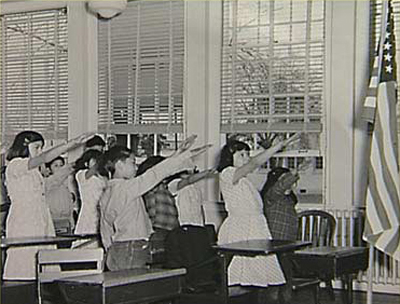
For now our culture mostly holds on to the old meme that is "education is the right of all children and to ensure this right we make education compulsory." It's a crazy meme, not universally good but persistent because the compulsory education system itself infects new minds with the old meme year after year, decade after decade. It's like a bad case a worms. This pervasive meme is making us sick only we don't recognize the symptoms, so we keep spreading the eggs to new hosts.
I think about John Holt's ideas every day, and I deliberately share them with people who ask my opinion on a variety of issues from parenting and education to social issues and human rights. I see the idea growing. I see it around me personally with people I know, and I see it out in the world in the writings of others. When someone gets infected with the new idea, they spread it around to the people closest to them. Those people might spread it to people they come in contact with. Some of those people might just be carriers of the idea for a few years without ever changing their behavior and some might wash their hands of the whole thing. I used to hope for—envision—a large scale cultural evolution of ideas about children, but now, in spite of my excitement over unschooling, I feel that evolution, if it comes, is a long way distant.
The upside is that unschooling is getting some positive media attention compared with little to none even a few years ago. As people read more about unschooling, as people bump into unschoolers in magazine articles or news reports or in their own communities, and if those encounters are positive, the opportunities for the spread of the new meme increase. But exposure isn't everything. If the new meme is too different, too radical, it risks being rejected.
Part of the reason I think an unschooling-type evolution of ideas about children is not imminent is that people don't want to think too much. A new idea is easy to accept if it fits neatly into a little slot next to some of our other ideas and if it doesn't require too much work or personal time. For example, it's easier to believe (some small number of) kids turn to violence because of the influence of media—because we've been hearing that a long time, it's an established meme—than it is to think about other causes and their possible relation to our failure as a society to guarantee fundamental rights equally to children. That's big. It takes some time and personal energy. Our bodies want to reject that. Our immune system is ready to shut that thought down if our brain even dangles one neuron near the notion of adult rights and privileges for children. Oppression is an ugly word and we don't want to think we've been oppressing kids for generations or what that might be doing to their psychology and our society. It's too much work. Easier to hold onto the old ideas and blame video games.
Still, when I think of the look in the eyes of people even seven years ago when I said "unschooling" compared with the look today I can tell there is a difference. I see understanding more now than I did when my kid was young. I get fewer odd looks and questions. This difference is not nearly a cultural evolution, but it's some little bit of evidence that some small new ideas are taking hold in unexpected places. This evidence gives me encouragement, and I will continue to mingle with the masses in the hope of causing widespread infection.
This was first published in Connections, Issue 2, November 2006.
Deb Lewis, on John Holt's Teach Your Own

Deb Lewis, on John Holt's Never Too Late
Deb Lewis, on John Holt's A Life Worth Living
More Deb Lewis
More John Holt